

Category 3 Biohazard · Bellevue, WA · Same-Hour Response
Sewage Cleanup & Backup
Restoration in Bellevue, WA
Sewage backup is Category 3 black water — the most hazardous water damage classification. It requires full biohazard protocol: HEPA containment, PPE, EPA-registered antimicrobials, and IICRC clearance. Do not enter the area without protection. Call us immediately.
✓ Category 3 biohazard certified ✓ HEPA air scrubbing ✓ EPA-registered antimicrobials ✓ Same-hour response 24/7
Critical Safety Information
Sewage Backup Is Category 3 Black Water — Do Not Clean It Yourself
Category 3 water — also called black water or grossly contaminated water — contains sewage, bacteria, viruses, fungi, and other biological contaminants at levels hazardous to human health. Sewage backup from a failed drain line, backed-up municipal sewer, or toilet overflow involving sewage is always classified Category 3 regardless of how “clean” it may appear.
Attempting DIY cleanup without proper PPE, HEPA containment, and EPA-registered antimicrobials spreads contamination, creates health hazards for your family, and produces documentation insufficient for insurance claims. Our IICRC-certified biohazard teams handle the entire process safely.
⚠ What NOT to Do After Sewage Backup
✗ Do NOT enter the affected area without full PPE (gloves, respirator, protective clothing)
✗ Do NOT use household bleach — it does not kill Category 3 pathogens in porous materials
✗ Do NOT run HVAC or fans — spreads aerosolized contamination throughout home
✗ Do NOT let children or pets enter until IICRC clearance is confirmed
Cat 3
Grossly contaminated
Sewage, bacteria, viruses. Always requires full biohazard protocol.
$4K–$14K
Typical Bellevue cost
Depending on affected area and materials. Covered by most policies.
60 min
Our response time
All Bellevue ZIP codes. 24/7 including weekends.
Common Causes in Bellevue
Common Causes of Sewage Backup in Bellevue Homes
Bellevue’s aging sewer infrastructure and 1960s–70s homes with original clay sewer laterals create specific sewage backup risks.
🚬 Tree Root Intrusion
Crossroads and Lake Hills older homes with mature trees have original clay sewer laterals compromised by root intrusion. Roots grow through joint gaps, creating blockages that back up sewage into basement drains and ground-floor fixtures. Most common in pre-1980 Bellevue neighborhoods.
🌧 Municipal Sewer Surcharge
During heavy atmospheric river events, Bellevue’s combined sewer system can surcharge — municipal sewage backs up through private service lines into homes. Wilburton and low-lying Crossroads are most susceptible. Requires sewer backup rider coverage — not included in standard homeowners policy.
🚫 Drain Line Blockage
Grease accumulation, foreign objects, and pipe collapse in aging drain lines cause backup. When a main drain blockage occurs, sewage backs up through the lowest fixtures in the home — typically basement floor drains or ground-floor toilets. Affects all Bellevue home ages.
🚶 Failed Ejector Pump
Homes with below-grade bathrooms or laundry rely on ejector pumps to lift waste to the main sewer line. Pump failure results in sewage backup into below-grade fixtures. Somerset and Factoria split-level homes with lower-level bathrooms are most affected.
🚫 Pipe Collapse or Offset
Original 1960s–70s clay and Orangeburg sewer laterals in Crossroads and Lake Hills degrade over time, collapsing or offsetting at joints. Complete blockage results in sewage backup that requires emergency plumbing repair before restoration can begin.
💧 Toilet Overflow with Sewage
A toilet overflow containing sewage — not just clean water — is automatically Category 3. This includes any overflow that draws from below the P-trap where sewage is present. Requires full biohazard protocol even if the volume appears small.
IICRC Protocol
Our Sewage Cleanup Process in Bellevue
Every sewage cleanup follows IICRC Category 3 protocol. No shortcuts. IICRC clearance before reoccupancy on every job.
Site Assessment & PPE Setup
Our crew arrives in full Category 3 PPE — Tyvek suits, N95 respirators, nitrile gloves, and boot covers. We assess affected area, identify all contaminated zones with thermal imaging and moisture meters, and confirm the sewage source has been stopped (plumber called if needed) before beginning work.
Do not enter the area before our crew arrives. Contamination spreads through foot traffic.
HEPA Containment & Negative Air Pressure
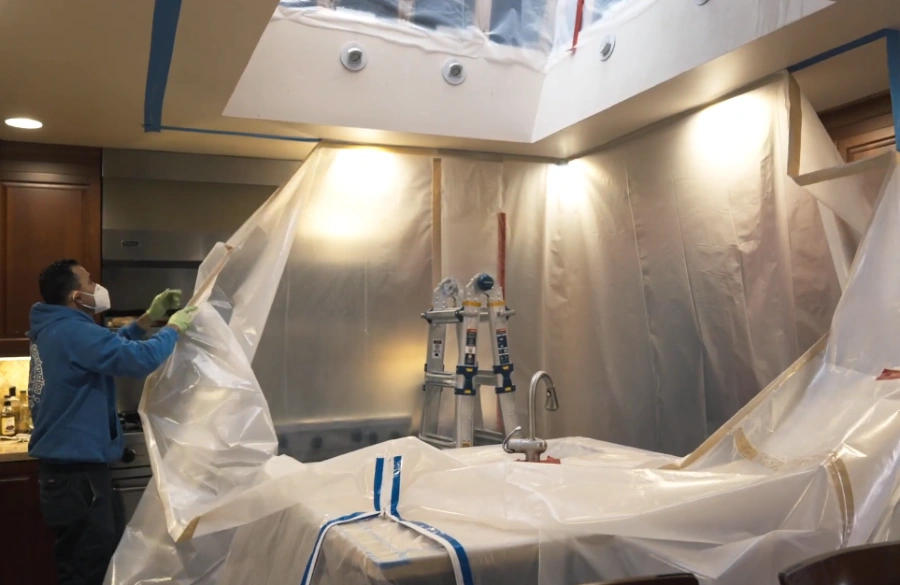
Polyethylene containment barriers seal the affected area from the rest of your Bellevue home. Negative air pressure established with HEPA air scrubbers running continuously — air flows into the contamination zone, not out. This prevents aerosolized sewage particles from reaching unaffected rooms, HVAC vents, or family living areas.
Sewage Extraction & Contaminated Material Removal
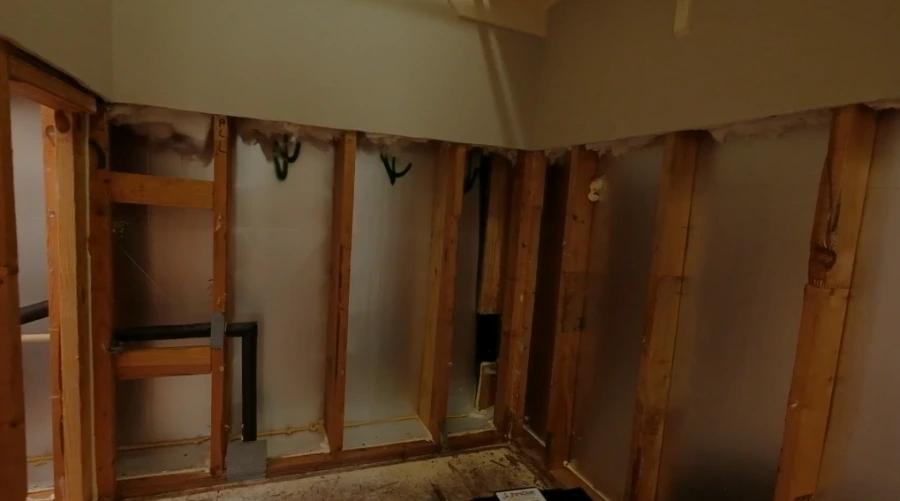
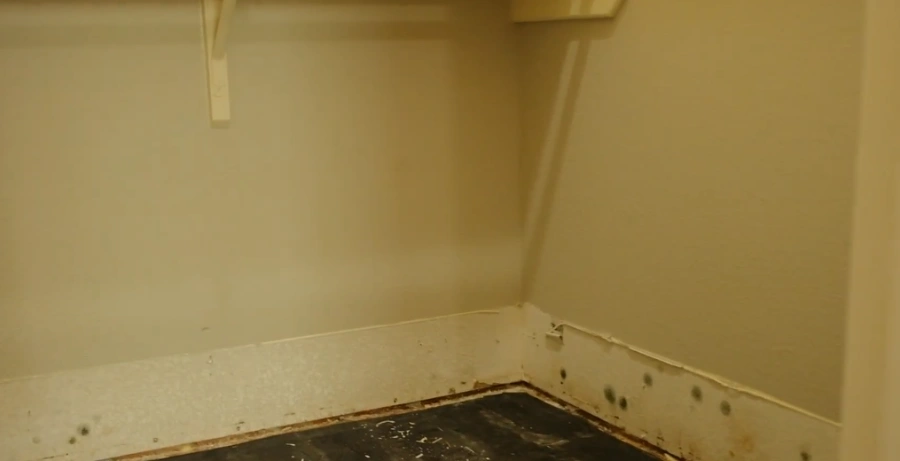
Standing sewage extracted using Category 3-rated equipment. All porous materials that cannot be decontaminated — carpet, pad, drywall up to the flood line, insulation — are removed in sealed biohazard bags inside the containment zone and properly disposed. In Bellevue, this typically includes 12–24 inches of drywall above the sewage high-water mark.
Porous materials exposed to Category 3 cannot be cleaned — only removed. This is IICRC protocol, not overcalling scope.
EPA-Registered Antimicrobial Treatment
All remaining structural surfaces — concrete, wood framing, subfloor sheathing — are cleaned with EPA-registered antimicrobials rated for Category 3 contamination. Two-stage treatment: initial disinfection, then antimicrobial application with dwell time per manufacturer specification. We document product names, EPA registration numbers, and application areas for your insurance scope.
Structural Drying — IICRC S500
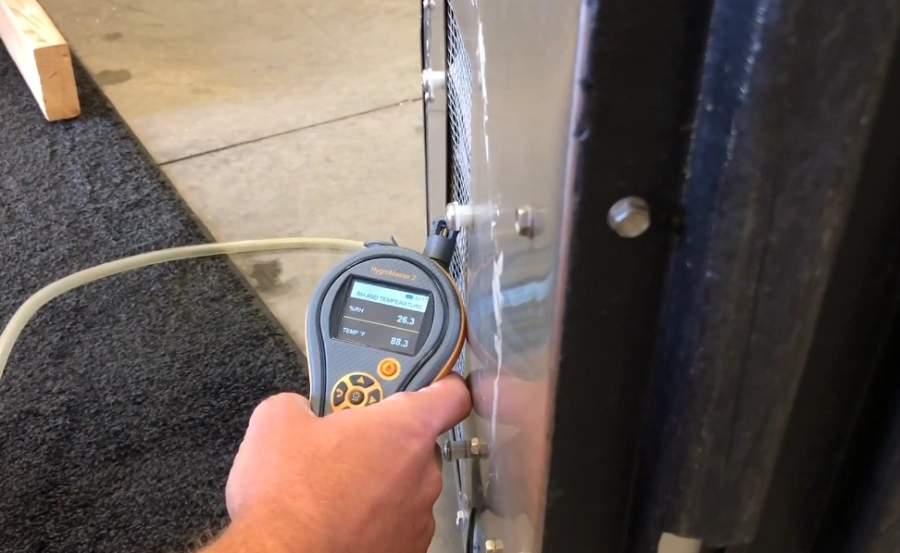
After extraction and disinfection, commercial drying begins. In Bellevue’s humid conditions, Category 3 jobs typically require 7–12 days of structural drying due to the depth of contamination and antimicrobial treatment requirements. Daily moisture logs submitted to your insurer. All equipment documented in Xactimate scope.
Clearance Testing & Written Report
Post-remediation air quality and surface testing confirms contamination is within safe limits. Written clearance report provided — required before any rebuild begins and submitted to your insurer as part of the complete claim package. We do not release the space until clearance passes.
Insurance Coverage
does homeowners insurance Cover Sewage Backup in Bellevue?
Coverage depends on the source of backup. This is the most important coverage question for Bellevue sewage events.
✓ Usually Covered
- ✓ Internal drain line blockage (your pipes)
- ✓ Ejector pump failure from mechanical failure
- ✓ Toilet overflow with sewage from internal cause
- ✓ Pipe collapse within your property
- ✓ Secondary damage from covered sewage event
⚠ Requires Sewer Backup Rider
- ⚠ Municipal sewer surcharge into your home
- ⚠ Sewer line backup from street to house
- ⚠ Tree root intrusion from public sewer
- ⚠ Combined storm/sewer surcharge events
Add sewer backup rider: typically $40–$80/year. Worth it in Crossroads, Lake Hills, Wilburton.
✗ Not Covered
- ✗ Flooding from Kelsey Creek (requires NFIP)
- ✗ Deferred maintenance on known sewer issues
- ✗ Gradual sewer deterioration without acute event
Average Bellevue sewage cleanup insurance payout with proper IICRC documentation and Xactimate scope: $14,000–$20,000. This covers extraction, containment, antimicrobial treatment, structural drying, drywall removal and replacement, and flooring replacement. Call us with your insurance card — we verify your sewer backup coverage before scheduling work.
Sewage Cleanup FAQs
Sewage Backup FAQs — Bellevue, WA
Is sewage backup dangerous? Can I clean it myself?
Sewage backup is Category 3 black water containing bacteria (E. coli, Salmonella, Leptospirosis), viruses (Hepatitis A, Norovirus), and parasites (Cryptosporidium). Direct contact or inhalation of aerosolized particles poses serious health risks, especially for children, elderly, and immunocompromised individuals. DIY cleanup without proper PPE, HEPA containment, and EPA-registered antimicrobials is not safe and does not meet IICRC standards required for insurance claims.
Does my homeowners insurance cover sewage backup in Bellevue?
Coverage depends on the source. Internal drain blockages and ejector pump failures are usually covered under standard homeowners policies. Municipal sewer surcharge backup — common during atmospheric river events in Crossroads, Lake Hills, and Wilburton — requires a sewer backup rider that many Bellevue homeowners do not have. Call us with your insurance card and we identify coverage before scheduling work. Average documented claim: $14,000–$20,000.
How long does sewage cleanup take in Bellevue?
Sewage cleanup in Bellevue typically takes 7–14 days from start to IICRC clearance. Initial extraction, containment, and antimicrobial treatment take 1–2 days. Structural drying to IICRC S500 baseline takes 7–12 days, extended by Bellevue’s Oct–Mar outdoor humidity. Post-treatment clearance testing results take 24–48 hours. Rebuild can begin after written clearance is issued.
Which Bellevue neighborhoods have the highest sewage backup risk?
Crossroads (98008) has the highest risk due to original 1960s clay sewer laterals with tree root intrusion. Lake Hills (98007) is second due to older infrastructure and Kelsey Creek municipal sewer proximity during storm surges. Wilburton (98005) near Mercer Slough has municipal sewer surcharge risk during heavy atmospheric river events. Factoria (98006) has older Orangeburg sewer lateral risk in 1970s homes.
Does sewage backup require a sewer backup insurance rider in Bellevue?
If the backup source is municipal sewer surcharge — the city sewer system backing up into your home during a storm — yes, a sewer backup rider is required. Standard homeowners policies exclude municipal sewer events. Riders typically cost $40–$80/year and are highly recommended for all Crossroads, Lake Hills, Wilburton, and Factoria homeowners. If you do not have a rider and the backup is from a municipal source, remediation costs are out-of-pocket. Internal pipe causes may still be covered under your standard policy.
Category 3 Emergency
Sewage Backup — Call Now, Do Not Enter
Category 3 black water is a biohazard. Do not enter without full PPE. Call us immediately — we dispatch a fully equipped biohazard crew within 60 minutes, 24 hours a day. Direct insurance billing. Written scope before work starts.
IICRC WRT + ASD Certified · Category 3 Biohazard Certified · WA License #NATIORC792M6 · 15700 Bel-Red Rd, Bellevue WA 98008 · [email protected] · 24/7/365