

IICRC S500 Certified · Bellevue, WA · Psychrometric Drying Science
Structural Drying in
Bellevue, WA
Structural drying in Bellevue’s 65–80% winter humidity requires commercial desiccant dehumidification systems, psychrometric calculations adjusted for Pacific Northwest conditions, and daily moisture monitoring — not household fans. IICRC S500 protocol on every job.
✓ IICRC S500 Protocol ✓ Commercial Desiccant Dehumidifiers ✓ Daily Moisture Logs ✓ Clearance Before Rebuild
Quick Answer
What Is Structural Drying and Why Does Bellevue Need Specialized Equipment?
Structural drying is the professional process of removing moisture from building materials — drywall, wood framing, subfloor, concrete, insulation — after a water damage event. It is not the same as air drying or running fans. Done incorrectly, it leads to mold growth, warped hardwood, structural rot, and failed insurance claims.
In Bellevue’s Pacific Northwest climate, structural drying is more technically demanding than in drier markets. October through March outdoor relative humidity of 65–80% means standard drying timelines are extended by 1–3 days. Commercial desiccant dehumidifiers capable of 70–150 pints per day are required to overcome ambient humidity. Every drying setup is calculated using psychrometric data — temperature, humidity, dew point — specific to your Bellevue home on that specific day.
3–5 days
Class 1–2 drying
Bellevue dry season. Slower in Oct–Mar.
5–9 days
Class 3 drying
Saturated walls/ceiling. Extended in PNW winter.
70–150 pt
Dehumidifier capacity
Per unit per day. Commercial grade required in Bellevue winter.
IICRC Damage Classification
Water Damage Classes — What They Mean for Drying Time in Bellevue
IICRC S500 classifies water damage into four classes based on moisture absorption. Class determines equipment quantity, drying timeline, and insurance scope.
Class 1
Lowest cost
Minimal absorption — small area
Water affects only part of a room. Minimum moisture absorbed by materials. Concrete, hardwood, or vinyl — low porosity materials. Example: small toilet overflow caught within 1 hour.
Bellevue drying time: 2–4 days (dry season), 3–5 days (Oct–Mar)
Equipment: 1–2 dehumidifiers, 3–5 air movers
Class 2
Most common
Significant absorption — full room
Entire room affected, moisture wicked up walls 12–24 inches. Carpet, pad, and subfloor saturated. Most galvanized pipe failures in Crossroads and Lake Hills result in Class 2 damage.
Bellevue drying time: 4–6 days (dry season), 5–8 days (Oct–Mar)
Equipment: 2–4 dehumidifiers, 8–15 air movers, InjectiDry wall drying
Class 3
Highest absorption
Saturated ceiling, walls, floor
Water came from above — ceilings, walls, and subfloor all saturated. Insulation typically wet. Somerset upstairs bathroom overflows and Crossroads attic leaks most commonly produce Class 3 damage.
Bellevue drying time: 6–9 days (dry season), 8–12 days (Oct–Mar)
Equipment: 4–8 dehumidifiers, 15–25 air movers, desiccants, InjectiDry
Class 4
Specialty drying
Low porosity materials saturated
Hardwood floors, plaster, concrete, or brick that require very low humidity and extended drying cycles. Common in Crossroads 1960s homes with original plaster walls and Bellevue’s premium hardwood floors.
Bellevue drying time: 10–21 days — extended low-humidity protocol
Equipment: Desiccant dehumidifiers, floor drying mats, specialty systems
Why Bellevue class assignments matter for your claim: Each IICRC damage class corresponds to specific equipment quantities and drying day allowances in Xactimate. If your contractor misclassifies your damage (assigns Class 2 to a Class 3 job), your adjuster approves fewer equipment days and less drying time — reducing your settlement by $2,000–$6,000. We assign class based on thermal imaging moisture data, not visual observation.
Commercial Equipment
The Equipment We Deploy — and Why Household Fans Don’t Work
Structural drying requires commercial-grade equipment calibrated to Bellevue’s specific psychrometric conditions. Here is what we deploy and why each piece matters.
🌧 Commercial Desiccant Dehumidifiers
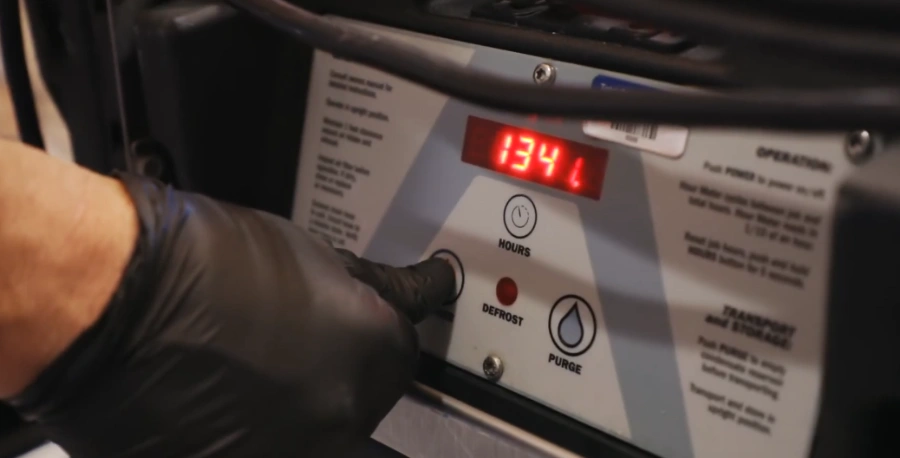
70–150 pints per day capacity. Desiccant units use silica-based drying agents that work efficiently in Bellevue’s cool, humid Oct–Mar conditions — where refrigerant dehumidifiers lose effectiveness. We position units based on psychrometric calculations for your specific room dimensions, current humidity, and dew point.
Household dehumidifiers: 20–30 pints/day. Ineffective in Bellevue winter. Will not achieve IICRC clearance.
💨 High-Velocity Air Movers
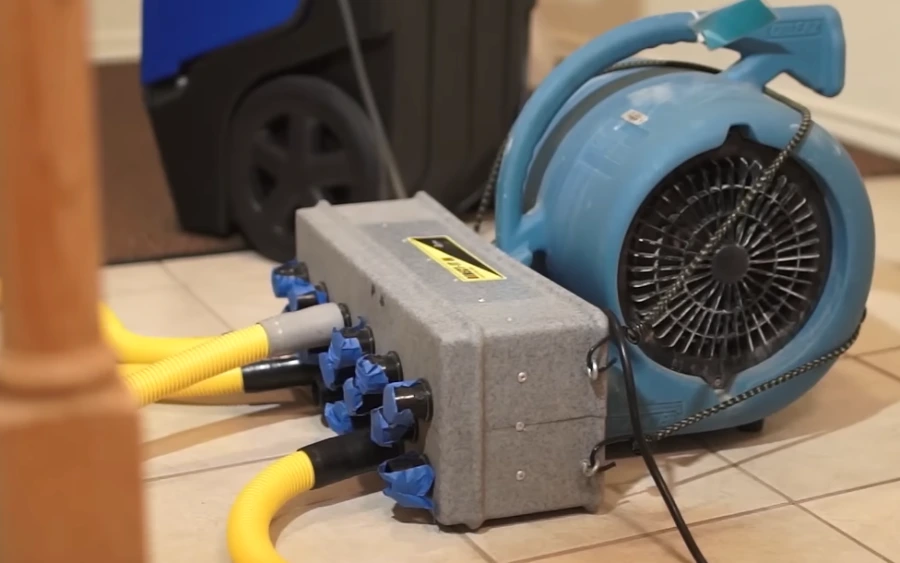
Directed airflow at 300–2,000 CFM moves moisture from saturated surfaces into the air where dehumidifiers capture it. Positioned at floor level, angled at walls, and positioned to create a spiral airflow pattern that maximizes evaporation rate. Quantity and placement calculated per S500 drying chamber principles.
Box fans push moisture deeper into wall cavities. Never use household fans after water damage.
📍 InjectiDry Wall Cavity Drying
Dries wall cavities without demolition. InjectiDry systems inject warm, dry air directly into the wall cavity through small drill holes — drying insulation and framing without opening walls. Critical for Bellevue’s 1960s plaster homes in Crossroads and Lake Hills where wall opening is expensive and disruptive. Saves $1,500–$4,000 in unnecessary demolition on average jobs.
Used on every Class 2+ job. Standard in our Bellevue scope.
📺 FLIR Thermal Imaging & Moisture Meters
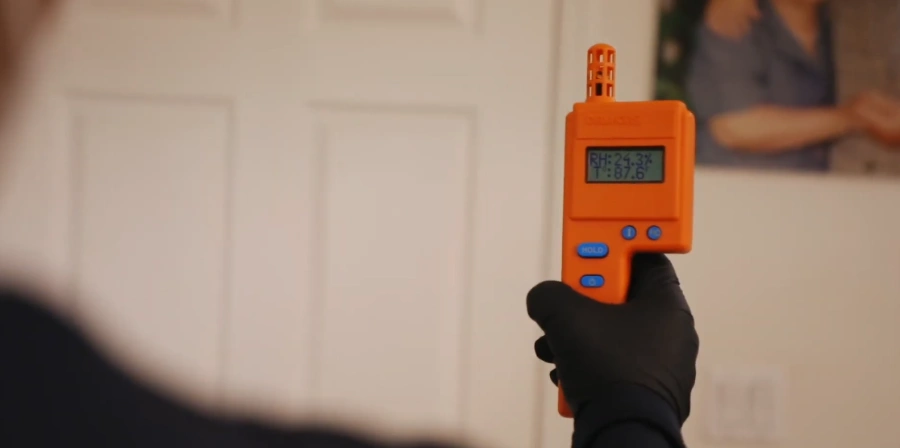
Maps hidden moisture before and during drying. We measure moisture content at every affected point daily using calibrated pin and pinless meters. Thermal cameras confirm moisture distribution matches readings. These daily logs become your Xactimate documentation — without them, adjusters dispute equipment days.
Timestamped readings sent to you every day via text.
🏠 Floor Drying Mats
For Class 4 hardwood and concrete. Specialized low-profile drying mats applied directly to hardwood floors create a sealed drying chamber that forces warm, dry air through the floor assembly. Common in Bellevue’s premium Downtown condos and newer Somerset homes with engineered hardwood over concrete subfloors.
Saves full hardwood floor replacement in many cases. $8,000–$15,000 in avoided costs.
🌊 Truck-Mounted Extraction
10–20x faster than portable units. Truck-mounted systems remove standing water from subfloor voids, wall cavities, and crawl spaces that shop-vacs and portables cannot reach. Faster extraction means faster drying start — critical in Bellevue’s 24-hour mold window. Every job begins with maximum extraction before any drying equipment is positioned.
Available 24/7. Dispatch within 60 minutes anywhere in Bellevue.
IICRC S500 Process
Our Structural Drying Process in Bellevue
Every job follows IICRC S500 from arrival to clearance. No rebuild begins until moisture content returns to Bellevue pre-loss baseline.
Psychrometric Assessment
We measure temperature, relative humidity, dew point, and specific humidity inside your home and outside. This data determines equipment quantities, expected drying time, and the target moisture levels for your specific building materials. In Bellevue’s Oct–Mar season, outdoor conditions significantly affect indoor drying calculations.
Bellevue pre-loss EMC target: 8–13% for wood materials, per regional baseline.
Maximum Extraction First
Truck-mounted extraction removes all accessible standing water before any drying equipment is positioned. Subfloor voids, crawl spaces, and wall cavities are extracted using specialty wands and attachments. Faster extraction means faster drying start — critical in Bellevue’s 24-hour mold window. We do not position dehumidifiers until extraction is complete.
Equipment Placement per S500 Drying Chambers
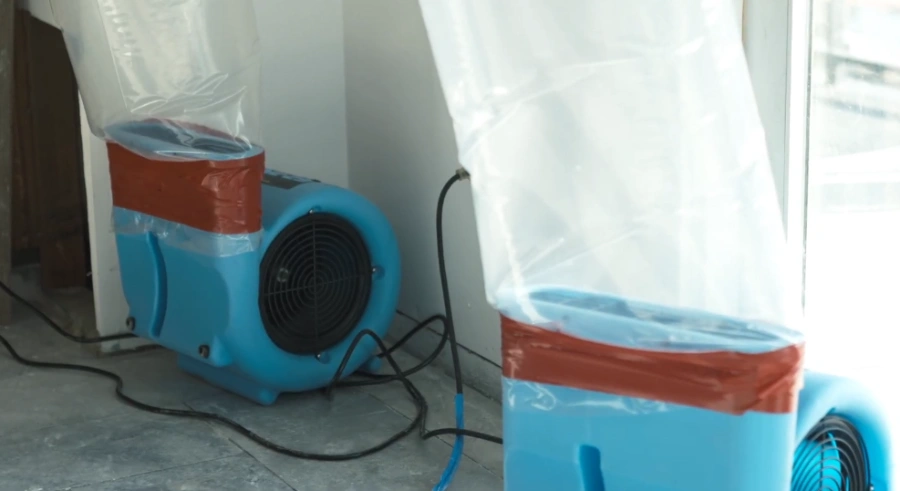
Dehumidifiers and air movers are positioned to create S500 drying chambers — defined zones where airflow and dehumidification work together at calculated rates. InjectiDry systems are installed for wall cavities. Floor drying mats for hardwood. The setup is documented in your Xactimate scope with equipment model numbers and placement coordinates.
Daily Monitoring & Moisture Log
We return every day to record moisture content at every measurement point established on Day 1. Readings are logged with timestamp, location, material type, and target baseline. If readings are not progressing on schedule, equipment is repositioned or augmented. Daily logs are submitted to your adjuster — these are the line items adjusters most commonly dispute without documentation.
You receive readings by text daily. Your insurer receives the complete log at clearance.
IICRC S500 Clearance — Then Rebuild Begins
Drying is complete when all affected materials reach pre-loss equilibrium moisture content for Bellevue’s regional baseline. We do not declare clearance based on time alone — only on confirmed moisture readings. Written clearance report issued. Your Xactimate rebuild scope is submitted to your carrier. No contractor should begin rebuild work until structural drying clearance is confirmed in writing.
Structural Drying FAQs
Structural Drying FAQs — Bellevue, WA
How long does structural drying take in Bellevue, WA?
In Bellevue, Class 1 drying takes 2–4 days in dry season, 3–5 in Oct–Mar. Class 2 runs 4–6 days dry, 5–8 wet season. Class 3 (saturated ceilings and walls) takes 6–9 days dry season, 8–12 in winter. Class 4 specialty drying (hardwood, plaster, concrete) takes 10–21 days. Bellevue’s Oct–Mar outdoor humidity of 65–80% adds 1–3 days vs. national averages. Drying is complete only when moisture readings reach pre-loss baseline — not based on a fixed number of days.
Can I use fans and a household dehumidifier instead of calling a professional?
No. Household dehumidifiers produce 20–30 pints per day — insufficient in Bellevue’s winter humidity. Box fans push moisture deeper into wall cavities, increasing hidden damage. Neither achieves IICRC S500 clearance, which insurance carriers require before approving rebuild costs. DIY drying also fails to document the moisture levels adjusters need for equipment fee approval — resulting in lower settlements. Professional drying costs are covered by insurance; the difference is which contractor does it.
What is IICRC S500 and why do insurance carriers require it?
IICRC S500 is the Standard and Reference Guide for Professional Water Damage Restoration. It defines industry best practices for extraction, structural drying equipment selection, drying chamber setup, psychrometric monitoring, and clearance testing. Most Washington State insurance carriers require S500 documentation to approve structural drying equipment fees. Without it, adjusters have no standard to reference and routinely reduce or deny equipment line items.
Why does structural drying take longer in Bellevue than in other cities?
Bellevue’s Oct–Mar outdoor relative humidity of 65–80% significantly slows evaporation. Commercial dehumidifiers work harder and longer to pull moisture from building materials when outdoor air is already heavily saturated. The same Class 2 job in Phoenix might dry in 3 days. In Bellevue in January, it takes 5–8 days. Each extra equipment day is documented in psychrometric logs and justified with outdoor humidity data — adjusters cannot dispute climate-driven extension when properly documented.
When can I start rebuilding after water damage in my Bellevue home?
Rebuild cannot safely begin until structural drying reaches IICRC S500 pre-loss equilibrium moisture content for Bellevue’s regional baseline — typically 8–13% EMC for wood materials. Starting rebuild before clearance traps moisture inside walls and floors, leading to mold growth, structural rot, and warped finishes within 3–6 months. We issue a written clearance report. Your contractor should require this document before beginning any work.
Will insurance cover structural drying equipment costs in Bellevue?
Yes, for covered water damage events. Dehumidifier rental, air mover fees, InjectiDry systems, moisture monitoring, and clearance testing are all standard Xactimate line items covered by homeowners insurance. The key is daily moisture logs that justify each equipment day. Without documentation, adjusters routinely cut equipment days by 30–50%. With our daily logs and S500 protocol documentation, equipment fees are fully supported.
What is InjectiDry and do I need it for my Bellevue water damage?
InjectiDry is a wall cavity drying system that injects warm, dry air directly into wall assemblies through small holes drilled at baseboard level. It dries insulation and framing from the inside without opening walls. In Bellevue’s older Crossroads and Lake Hills homes with plaster walls and original insulation, InjectiDry avoids $1,500–$4,000 in unnecessary wall demolition. It is standard on every Class 2+ job. The cost is fully covered as an equipment line item in Xactimate.
IICRC S500 Certified Structural Drying
Drying Done Right — Clearance Before Rebuild
Commercial desiccant dehumidifiers, InjectiDry wall cavity drying, daily moisture logs, and IICRC S500 clearance before any rebuild. Every job in Bellevue, every time.
IICRC WRT + ASD Certified · WA License #NATIORC792M6 · 15700 Bel-Red Rd, Bellevue WA 98008 · [email protected] · 24/7/365