

How Quickly Does Mold Grow After Water Damage in Bellevue, WA?
Bellevue Water Damage Guide · Mold Risk · Updated July 2026
How Quickly Does Mold Grow After
Water Damage in Bellevue, WA?
In Bellevue’s Pacific Northwest climate, mold begins colonizing wet building materials in 20–24 hours — faster than the national standard. Here is exactly what happens, when, and what same-day extraction prevents.
Quick Answer
Mold begins growing in Bellevue homes within 20–24 hours of water damage — faster than the national 24–48 hour standard due to Bellevue’s Oct–Mar outdoor humidity of 65–80%. Same-day professional water extraction prevents mold growth on most jobs. If you call within 60 minutes of discovering water damage, mold remediation is usually not needed.
Every year, Bellevue homeowners discover water damage and make the same mistake: they run fans, call their insurer, and wait for an adjuster. By the time a professional restoration crew arrives — sometimes 24–48 hours later — mold has already begun colonizing the wet drywall, insulation, and wood framing inside their walls.
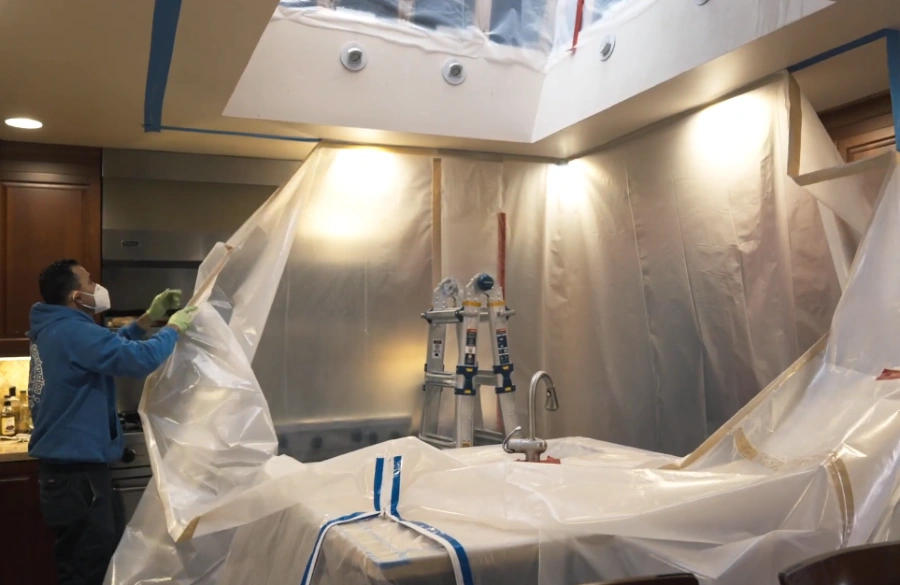
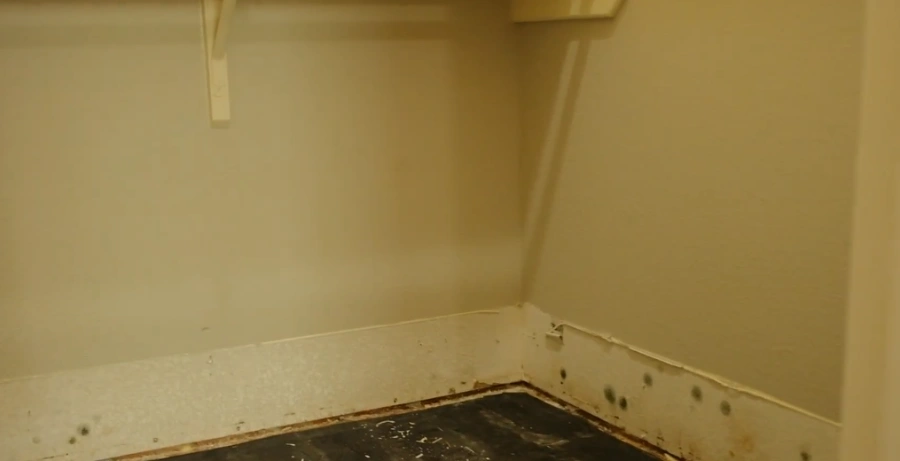
In drier markets, a 24-hour delay might be survivable. In Bellevue’s Pacific Northwest climate, it is often not. The city’s Oct–Mar outdoor relative humidity of 65–80% compresses the national mold growth window from 24–48 hours down to 20–24 hours. That is the difference between same-day extraction with no mold risk and mold remediation added to your water damage claim.
This guide covers exactly what happens inside a Bellevue home after water damage — hour by hour, material by material — and why the window for action is shorter here than anywhere else in Washington State.
What This Article Covers
- The mold growth timeline in Bellevue’s specific climate
- Which building materials mold colonizes first — and fastest
- Why Crossroads and Lake Hills homes are highest risk
- The 20–24 hour window and what determines whether you cross it
- What same-day extraction actually prevents
- Signs mold has already started growing before you notice
The Bellevue Mold Growth Timeline — Hour by Hour
This is what happens inside a Bellevue home after a water damage event — specifically during October through March atmospheric river season when outdoor humidity is highest.
Water event occurs. Category 1. No mold risk.
Water from a clean source — burst supply line, appliance overflow, water heater failure — is Category 1 at the moment of event. No biological contamination. Lowest remediation cost. If you call a restoration company immediately, extraction begins within 60 minutes and mold risk is essentially zero.
Water absorbs into materials. Degrading to Category 2.
Water begins wicking into drywall, insulation, subfloor, and wall cavities. Carpet absorbs into the pad and subfloor. In Bellevue’s humid conditions, absorbed moisture creates the temperature and humidity conditions mold spores need to germinate. Water is now contaminated with bacteria from building materials — Category 2 grey water. Remediation cost increases 40–60%.
Mold spores begin germinating. Bellevue’s critical window.
Mold spores — naturally present in every Bellevue home’s air — begin germinating on wet surfaces. In Bellevue’s Oct–Mar climate, this happens at the early end of this window (closer to 12–16 hours) rather than the late end. Aspergillus and Penicillium are the first species to appear. They are not yet visible. You cannot smell them yet. But they are growing inside your wall cavities.
Active mold colonization. Two problems now, not one.
Mold hyphae (root structures) penetrate into porous materials — drywall paper, insulation fibers, wood grain. Visible surface growth may begin appearing as discoloration or fuzzy patches. You now have simultaneous water damage and mold — two separate remediation scopes, two sets of insurance documentation requirements, and significantly higher total remediation cost.
Established colonies. Odor begins. Structural risk.
Multiple mold colonies established on drywall, subfloor, insulation, and potentially floor joists. Musty odor noticeable. Cladosporium may appear on HVAC components, spreading spores through the ventilation system to other rooms. Water has now been Category 3 status for 24–48 hours. Structural integrity of drywall and insulation compromised. This is a significantly more expensive remediation than a same-day response job.
Why Bellevue’s Mold Window Is Shorter Than National Averages
The 24–48 hour mold growth window you see cited in national guidelines assumes a controlled indoor environment. Bellevue’s Oct–Mar season creates conditions that compress that window significantly.
65–80% Outdoor Humidity
Bellevue’s Oct–Mar outdoor relative humidity averages 65–80%. This elevated ambient moisture means wet building materials cannot evaporate to the atmosphere effectively. Moisture stays concentrated in walls and floors rather than dissipating. Mold germination conditions are met faster because the drying rate is slower.
Kelsey Creek Microclimate
Crossroads and Lake Hills sit adjacent to the Kelsey Creek watershed. Even without active flooding, the creek elevates local ambient humidity above Bellevue’s already-high regional average in wet months. Homes within a quarter mile of Kelsey Creek consistently record higher indoor relative humidity baseline readings than homes further away.
1960s Construction Materials
Crossroads and Lake Hills homes with original plaster walls, cellulose insulation, and wood subfloors absorb and retain moisture differently than modern drywall construction. These materials reach mold-favorable moisture content faster after a water event and are harder to dry once saturated, extending the remediation scope significantly.
The Practical Impact
A Crossroads homeowner with a galvanized pipe failure in January who calls for a 2am response gets same-hour extraction, and mold is essentially never an issue. The same event discovered at 8am after running overnight — 8 hours of exposure in Bellevue’s humid January conditions — has a high probability of mold present in wall cavities. The eight hours between discovery and a professional response is often the difference between a $5,000 job and a $12,000 job.
Which Building Materials Mold Colonizes First in Bellevue Homes
Not all building materials face equal mold risk. Here is the colonization sequence that our thermal imaging and moisture mapping consistently reveals in Bellevue water damage jobs.
Drywall paper — 12–24 hours
The paper facing of standard drywall is an ideal mold substrate — cellulose-based, organic, and highly absorbent. Mold germination on wet drywall paper begins within 12–24 hours in Bellevue’s humid conditions. The gypsum core provides no nutrients, but the paper provides both nutrients and moisture retention. This is why drywall above the flood line must be removed in all Cat 2+ jobs.
Cellulose insulation & fiberglass batt facing — 16–24 hours
Insulation holds moisture against the wall cavity for extended periods. In Crossroads and Lake Hills homes with original cellulose insulation from the 1960s, mold colonizes the cavity quickly. Even fiberglass batt insulation, while not a nutrient source itself, holds moisture against the kraft paper facing which molds readily.
Carpet and pad — 24–48 hours
Wet carpet pad is a dense organic substrate that holds moisture and heat at floor level. Mold colonization begins on the bottom of the pad (against the subfloor) within 24–48 hours. Carpet face fiber molds more slowly, but pad saturation almost always requires replacement once mold growth begins underneath. The subfloor beneath saturated pad is at significant risk.
Wood framing & subfloor sheathing — 48–96 hours
Structural wood framing takes longer to colonize because it is denser and less nutrient-rich than paper or organic fill materials. But once mold establishes on framing, it penetrates the wood grain and cannot be cleaned — only treated with antimicrobials that stop surface growth without eliminating deeper colonization. Stachybotrys (black mold) requires sustained wood moisture, appearing after 4–7 days of continuous saturation.
Signs Mold Has Already Started in Your Bellevue Home
Most mold growth in water damage events begins where you cannot see it — inside wall cavities, under carpet, in crawl spaces. These are the signals that colonization is likely already underway.
Musty odor from vents or registers
The first detectable sign. Mold produces MVOCs (microbial volatile organic compounds) before becoming visible. If air from floor or wall registers smells musty, mold is growing inside the wall assembly or in your HVAC system.
Discoloration without visible wetness
Grey, black, or green staining on walls or ceilings that do not feel wet to the touch. The surface has dried but mold colonization began before drying. Thermal imaging typically reveals active moisture 6–12 inches beyond the visible staining.
Soft spots or bubbling in drywall
Drywall that feels soft, spongy, or has a bubbled surface has moisture damage that has been present long enough to delaminate the paper facing. Mold is almost certainly present behind these areas.
Worsening allergy symptoms
Persistent sneezing, coughing, eye irritation, or asthma worsening that improves when you leave home suggests active mold spore presence in your living space from colonization in walls, floors, or crawl spaces.
Cupping or buckling hardwood floors
Hardwood floors cupping from below indicates subfloor moisture retention. In Bellevue homes, subfloor moisture that has warped hardwood has typically been present long enough for mold to begin on the underside of the floor assembly.
Crawl space odor through floor vents
Musty smell rising from crawl space through floor registers or gaps. In Crossroads and Lake Hills homes, crawl space mold from atmospheric river water table events often goes undetected for weeks until floor-level odor becomes noticeable.
If You See Any of These Signs
Call us immediately. Our FLIR thermal imaging and calibrated moisture meters can locate active moisture and identify where mold growth has occurred within 30–60 minutes of arrival. This assessment determines whether you have a water damage job, a mold remediation job, or — as is common in Bellevue galvanized pipe events — both simultaneously.
What Same-Day Extraction Actually Prevents
Our 60-minute response to every Bellevue ZIP code is specifically designed around this mold window. Here is what same-hour extraction prevents on a typical Bellevue water damage job.
Without Same-Day Response
- ✗ Mold begins in 20–24 hrs
- ✗ Drywall becomes unsalvageable
- ✗ Carpet pad requires replacement
- ✗ Insulation must be removed
- ✗ IICRC S520 mold scope added
- ✗ Insurance disputes possible
- ✗ Total cost: $10,000–$25,000+
With Same-Hour Extraction
- ✓ Mold risk eliminated
- ✓ Drywall often salvageable
- ✓ Carpet may be saved with mats
- ✓ Insulation dried in place
- ✓ Water damage scope only
- ✓ Clean insurance documentation
- ✓ Total cost: $4,000–$8,000
The dollar difference between same-hour and 24-hour response in a typical Bellevue home is $6,000–$17,000. Most of that difference is in materials that could have been saved: drywall that would have dried without mold, carpet pad that was within the salvage window, insulation that would have responded to InjectiDry drying.
Our staging location at 15700 Bel-Red Rd puts us within 20–60 minutes of every Bellevue ZIP code. We answer every call 24 hours a day with a live person. A 2am Crossroads galvanized pipe failure gets the same response urgency as a 2pm Factoria appliance overflow. The mold window does not respect business hours.
Frequently Asked Questions
How long does it take for mold to grow after water damage in Bellevue, WA?
In Bellevue’s Oct–Mar high-humidity season, mold begins colonizing wet building materials in 20–24 hours. In drier summer months, the window extends to 24–36 hours. Same-day water extraction from a certified restoration company eliminates mold risk on most jobs. If water has been present more than 24 hours, thermal imaging is required to determine whether mold remediation is needed.
Is mold always present after water damage?
No — mold is not inevitable after water damage. When water extraction begins within 60 minutes of a water event and structural drying is completed to IICRC S500 baseline within 3–7 days, mold does not develop on most jobs. Mold becomes a significant issue only when extraction is delayed more than 12–24 hours, when hidden moisture in wall cavities is missed, or when structural drying is incomplete.
How do I know if mold has grown after my water damage event?
Early signs include musty odor from vents, discoloration on walls or ceilings, soft spots in drywall, worsening allergy symptoms, and cupping hardwood floors. However, mold in wall cavities and crawl spaces produces no visible signs for days or weeks. FLIR thermal imaging and calibrated moisture meters are the only reliable way to identify hidden mold colonization in Bellevue homes with original 1960s–70s construction.
Does homeowners insurance cover mold from water damage in Bellevue?
Yes, when mold results from a covered sudden water damage event and the homeowner responded promptly. Washington homeowners policies typically cover mold remediation as part of a covered water damage claim when same-day restoration was attempted. If mold developed from delayed response or a gradual leak, coverage is frequently disputed. Our 60-minute response and timestamped documentation creates the record that protects your mold coverage.
Related Pages
More From Water Damage Restoration Bellevue WA
Mold Remediation Bellevue
IICRC S520 certified mold remediation — when mold has started.
Emergency Response
Call within the 20–24 hour window to prevent mold entirely.
Structural Drying
Proper drying is the only way to stop mold at the source.
Same-Day Water Extraction
Extraction within hours eliminates mold risk on most events.
Full Restoration Checklist
Step-by-step guide including mold prevention actions.
Crossroads 98008 Mold Risk
Kelsey Creek + galvanized pipes = highest mold risk in Bellevue.
The 20-Hour Window
Every Minute Matters — Call Before the Window Closes
In Bellevue’s climate, you have 20–24 hours before mold becomes a separate remediation problem. We are staged at 15700 Bel-Red Rd. A live person answers right now. On-site within 60 minutes.
IICRC WRT + ASD + S520 Certified · WA License #NATIORC792M6 · Bellevue, WA · 24/7/365 · [email protected]