

Water Heater Failure Water Damage in Bellevue, WA — What to Do and What It Costs
Bellevue Water Damage Guide · Water Heater Failure · Updated July 2026
Water Heater Failure Water Damage
in Bellevue, WA
Water heater failures are the third most common water damage event in Bellevue after supply line failures and appliance overflows. A 50-gallon tank rupture delivers its entire contents in minutes — and continues at 15–20 gallons per hour from the supply line until someone shuts it off. Here is exactly what to do, what it costs, and what your insurance covers.
Quick Answer
Water heater failure in Bellevue is a covered sudden and accidental event under standard homeowners insurance. Average documented King County claim: $8,000–$13,000. First step: shut off the water supply valve to the heater. Second: cut power or gas. Third: call us at (425) 920-1919 before calling your insurer. Do not run fans or attempt DIY cleanup.
How Much Water a Failed Water Heater Releases — and How Fast
Most Bellevue homeowners underestimate how much water a water heater failure releases. A tank rupture or pressure relief valve failure is not a slow drip — it is a sudden, high-volume event that can saturate an entire utility room or garage floor in minutes and migrate into adjacent rooms within hours.
50 gal
Instant tank release
From a standard 50-gallon tank rupture in minutes
15–20 gph
Continuing from supply
Per hour until supply valve is shut off
8–12 hrs
Avg overnight detection
Most Bellevue failures run overnight before discovery
12–16 yrs
Average heater lifespan
Most Bellevue failures occur at 10–14 years
An overnight water heater failure discovered at 7am — common in Bellevue utility closets and garages — has typically been running for 6–10 hours. At 15–20 gallons per hour, that is 90–200 gallons released beyond the initial 50-gallon tank volume. In Bellevue’s Oct–Mar conditions, this volume saturates subfloor sheathing, adjacent drywall, and in some cases reaches the crawl space below the utility room floor within that timeframe.
If You Discover a Water Heater Failure Right Now
- 1. Turn the cold water supply valve to OFF — it is the pipe entering the top of the heater
- 2. Turn off the circuit breaker (electric) or gas shutoff valve (gas heaters)
- 3. Do not run fans or HVAC — moisture spreads further
- 4. Photograph everything before touching or moving anything
- 5. Call us at (425) 920-1919 — before calling your insurer
Types of Water Heater Failures in Bellevue Homes
Not all water heater failures are the same. The type of failure affects water volume, damage extent, and how your insurance carrier classifies the event.
Tank Rupture — Full Volume Sudden Release
The tank shell corrodes through from the inside, typically after 10–15 years of mineral sediment accumulation. In Bellevue’s moderately hard water supply, sediment builds on the tank bottom and accelerates corrosion. When the tank ruptures, all 40–80 gallons release immediately — plus supply line flow until the valve is closed. The most damaging failure type due to instant high volume.
Most common in Bellevue homes with 12–16 year old tanks that have never been flushed annually.
Pressure Relief Valve (T&P) Discharge
The temperature and pressure relief valve opens when tank temperature or pressure exceeds safe limits, discharging through the discharge pipe. If the discharge pipe terminates inside the utility room rather than outside or to a drain, hot water discharges directly onto the floor. Can produce significant water damage if the valve sticks open or if the over-temperature condition persists.
Covered event. Stuck open T&P valve requires immediate plumber call in addition to water damage extraction.
Supply or Return Line Connection Failure
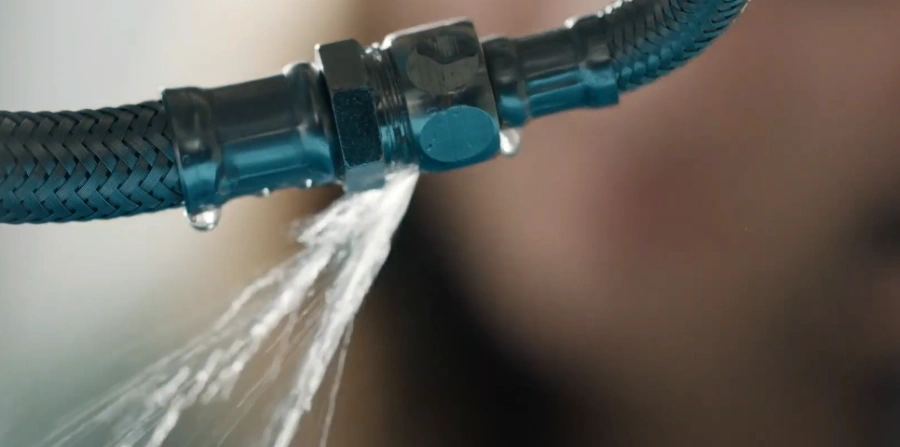
The connections at the top of the water heater — cold supply in, hot water out — are common failure points, especially in Crossroads and Wilburton homes where original flex connectors (corrugated copper or braided stainless) have never been replaced. Connector failure produces continuous supply line flow at normal household pressure until the supply valve is closed.
Covered as sudden and accidental. Same documentation requirements as any supply line failure.
Anode Rod Depletion and Sediment Overflow
As the sacrificial anode rod depletes, the tank corrodes from inside and sediment accumulates at the bottom. When sediment builds to overflow level or the bottom of the tank corrodes through, a slow seep that escalates to a full leak occurs. This failure type begins gradually but typically produces a sudden rupture event when the weakened tank bottom finally gives way.
Insurance coverage: sudden rupture at end of gradual process is typically covered as sudden event when documented correctly.
Where Water Goes After a Heater Failure in Bellevue Homes
Water heater location determines damage spread. Bellevue homes have heaters in three common locations — each produces different damage patterns.
🏠 Utility Closet (Most Common)
Water exits the closet under the door, spreading across hardwood or tile floors into adjacent living space. Subfloor absorbs through vinyl or tile grout. In Crossroads and Wilburton 1970s–80s homes, the utility closet is often adjacent to carpeted hallways — water wicks under the carpet and pad within minutes.
Thermal imaging typically finds moisture 8–15 feet beyond the utility closet door.
🏠 Garage (Second Most Common)
Garage floor drains often cannot handle sudden high-volume releases. Water pools, seeps under the door into the home, and migrates toward the lowest point — often a carpeted step-down into the house. Garage water heater failures that run overnight frequently reach adjacent rooms before discovery.
Most BelRed and Wilburton garage heater failures run 6–10 hours before morning discovery.
🏠 Crawl Space or Basement
Less common in Bellevue but present in some Lake Hills and Factoria homes with basement-adjacent water heaters. Water pools in the lowest point before detection. Crawl space heater failures can run for days before the homeowner notices floor soft spots above. Highest damage class event.
Multi-day crawl space events require IICRC Class 3–4 drying protocol. Extended 10–14 day drying.
Why Thermal Imaging Is Critical for Heater Failures
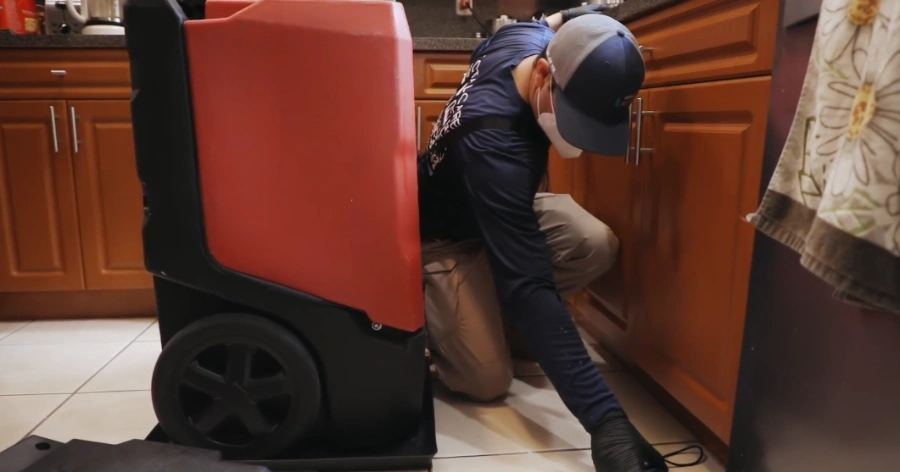
Water heater failures in utility closets and garages migrate further than any visible wet zone suggests. Our FLIR thermal imaging consistently finds moisture 8–15 feet beyond the visible damage boundary in Bellevue utility closet events. This hidden moisture — in subfloor voids, wall bases, and adjacent room carpet pads — is where mold begins in Bellevue’s 20–24 hour window. Without thermal documentation, this moisture is not in your Xactimate scope and not in your insurance settlement.
Insurance Coverage for Water Heater Failure in Bellevue
Water heater failure is one of the most straightforward covered events in Washington State homeowners insurance — but the same adjuster tactics that apply to other water damage claims apply here too. Here is exactly what is covered and how to protect your full settlement.
✓ Covered
- ✓ Tank rupture — sudden event
- ✓ Supply line connection failure
- ✓ T&P valve discharge damage
- ✓ Water extraction and drying
- ✓ Drywall removal and replacement
- ✓ Flooring replacement (carpet, hardwood, tile)
- ✓ Subfloor sheathing replacement
- ✓ Mold remediation (if event-related)
✗ Not Covered
- ✗ The water heater itself (appliance)
- ✗ Water heater replacement cost
- ✗ Gradual seep from deferred maintenance
- ✗ Pre-existing corrosion damage
- ✗ Mold from delayed response
Note: Your homeowners policy covers the damage caused by the heater failure — not the heater replacement itself. The new heater is out of pocket.
⚠ Common Adjuster Disputes
- ⚠ “Gradual seep” vs. sudden rupture
- ⚠ Scope undervalued at national rates
- ⚠ Equipment days cut without logs
- ⚠ Hidden damage denied
- ⚠ Pre-existing mold claim
Our documentation prevents every one of these disputes.
The gradual vs. sudden dispute: Some adjusters attempt to classify a water heater tank rupture as “gradual corrosion” rather than a sudden event — especially with older tanks. Our thermal imaging documents the acute moisture spread pattern that is physically impossible to produce from gradual seepage. An anode rod depletion that finally ruptures the tank produces an acute event pattern, not a gradual accumulation pattern. The thermal evidence is decisive.
Average King County Water Heater Claim Settlement
Without documentation
$3–$5K
Visual-only estimate, national pricing
Signs Your Water Heater Is About to Fail — Bellevue Prevention Guide
Most Bellevue water heater failures are preventable. Here are the warning signs that your heater is approaching end of life — and the steps to take before it fails.
Rusty or discolored hot water
Brown, orange, or rust-colored hot water indicates internal tank corrosion. This is the most reliable end-of-life warning. Replace the heater within 30–60 days of seeing this sign — tank rupture can follow within weeks.
Age over 10 years
The average water heater lasts 12–16 years. Check the manufacture date on the serial number label (first 4 digits are typically the year and week). Tanks over 12 years in Bellevue’s moderately hard water supply are at elevated failure risk.
Rumbling or popping sounds
Sediment has built up on the tank bottom. As the burner heats water, it forces through the sediment layer, creating rumbling or popping sounds. This sediment accelerates corrosion and reduces efficiency. Annual flushing removes sediment and extends tank life.
Water pooling around the base
Any moisture around the base of a water heater is a warning that the tank shell or connection fittings are leaking. Do not ignore small puddles — they escalate to full tank failure. Call a plumber immediately when you see base pooling.
Inconsistent hot water temperature
Failing heating elements (electric) or burner issues (gas) produce inconsistent temperature. While this may not directly cause water damage, it indicates the unit is degrading and should be evaluated by a plumber.
Corroded or original flex connectors
In Crossroads and Wilburton 1970s–80s homes, the original corrugated copper flex connectors at the top of the heater are commonly overlooked during appliance replacement. These connectors can be 30–40 years old even with a newer tank. Replace them during any heater replacement.
Prevention recommendation for Bellevue homeowners: (1) Know your heater’s age from the serial number. (2) Flush annually to remove sediment. (3) Replace the anode rod every 4–6 years. (4) Install a water heater drip pan and floor drain if not already present. (5) If your heater is over 10 years old and showing any of the above signs, proactive replacement costs $800–$1,500 — far less than the average $8,000–$13,000 water damage claim from a failure.
Water Heater Failure FAQs — Bellevue, WA
Does homeowners insurance cover water heater failure water damage in Bellevue?
Yes. Water heater failure is a sudden and accidental event covered under standard Washington State homeowners insurance. Your policy covers all water damage caused by the failure — extraction, drying, drywall, flooring, and mold remediation if needed. It does not cover the cost of the water heater itself, which is an appliance replacement cost. Call us first; we verify your coverage and deductible before scheduling any work.
How much does water heater failure water damage restoration cost in Bellevue?
Typical Bellevue water heater failure restoration costs $3,500–$7,000 for extraction and structural drying depending on how long the event ran and affected area. With proper Xactimate documentation at King County rates, State Farm, Safeco, and Allstate claims from water heater events in Bellevue typically settle for $8,000–$13,000 including mitigation and rebuild scope. Written scope provided before any work begins.
What is the first thing I should do when my water heater fails?
Shut off the cold water supply valve to the heater — it is the pipe entering the top of the tank, usually with a gate valve or ball valve. Then turn off power (electric: circuit breaker) or gas (gas: shutoff valve on the supply line). Photograph all affected areas before moving anything. Then call us at (425) 920-1919. Do not call your insurer first — we document the damage and verify your coverage before you open the claim.
How do I know if water from my heater reached the subfloor or walls?
You typically cannot tell from visual inspection alone. Water migrates under flooring, into wall bases, and through subfloor assemblies in ways invisible to the eye. Our FLIR thermal imaging consistently finds moisture 8–15 feet beyond the visible wet zone in utility closet events. Without thermal imaging, this hidden moisture is not in your insurance scope and not in your settlement — but it will cause mold within 20–24 hours.
How long does water heater failure restoration take in Bellevue?
Extraction takes 1–3 hours on-site. Structural drying takes 3–10 days depending on water volume released, how long the event ran before discovery, and Bellevue’s seasonal humidity. Overnight failures that ran 6–10 hours require 6–10 days of drying. Insurance claim approval takes 2–4 weeks with our Xactimate documentation. Rebuild (new flooring, drywall, paint) follows IICRC clearance and is a separate contractor scope.
Can my hardwood floors be saved after a water heater failure?
Often yes, if same-day extraction and floor drying mats are applied within 12–24 hours of the event. Solid hardwood has a longer salvage window than engineered hardwood over concrete. Floor drying mat systems force warm dry air through the floor assembly from below, pulling moisture out without removing the flooring. When successful, this saves $8,000–$15,000 in hardwood replacement costs. The mat system cost is covered by your insurance — you avoid paying for new hardwood.
Related Pages
More From Water Damage Restoration Bellevue WA
Emergency Response
Tank rupture — 60-min response before water spreads further.
Water Extraction
50-gallon rupture — truck-mounted extraction removes it fast.
Structural Drying
Subfloors and walls must be dried after water heater failure.
Insurance Claims
Most carriers cover sudden water heater failure — we document.
Mold Risk After Water Heater Failure
Hot water accelerates mold — faster growth than cold water events.
Restoration Cost
Average Bellevue water heater claim: $8K–$13K.
Water Heater Failed? Call Now
60-Minute Response — Before You Call Your Insurer
Shut off water supply, cut power or gas, photograph damage — then call us. Thermal imaging documents hidden moisture. Xactimate at King County rates. Average settlement: $8,000–$13,000. You pay your deductible only.
IICRC WRT + ASD Certified · WA License #NATIORC792M6 · 15700 Bel-Red Rd, Bellevue WA 98008 · [email protected] · 24/7/365